
Page 4 - Fiber Optic Technical Information & Documentation
- - 4 min read
MTP Fiber Cable introduction
An MTP cable is essentially a multi-strand fiber optic cable terminated with high performance MTP® or MTP Elite® connectors on one or multiple ends. Depending on application and compatibility, different styles of MTP fiber cable assemblies can be identified and rudimentary categorized into: MTP trunk cables, MTP extension harnesses and MTP breakout cables featuring up to 24 fibers per connector and 144 fiber strands per assembly. The MTP fiber cable, basically being an improved MPO fiber cable, meets and exceeds all of the MPO specifications yet provides full compatibility with MPO equipment and accessories. In order to maintain performance, it is recommended to use similar components to avoid complications such as an MTP-MTP connection. Visit our MTP Fiber Connector guide for more information.
- - 5 min read
Fiber Optic cables come in many varieties and configurations and without going into too much technical detail, this guide provides a basic overview on commonly used terminology , typical configurations and best practice applications of Fiber Optic Cable Assemblies. A Fiber Optic Cable assembly consist of the fiber cable itself terminated with optical connectors on either end. An assembly terminated with merely a connector on one end is commonly referred to as a fiber optic pigtail. The increased popularity of fiber optics in general and optical fiber cables in particular, is driven by the ability to transport electro-magnetic (optical) signals over short and long distances more efficiently (at higher data rates combined with a lower loss rate, attenuation and a smaller footprint) than traditional copper (CAT5/6) cables.
Optical Fiber Cable History and Structure
As light doesn't travel around curves or corners, it is the principle of guiding light by refraction that makes modern Fiber Optic Communication and Cables possible. This “guiding of light” essentially involves confining the light signal to the optical core, which in the case of Single-Mode Fiber features a diameter smaller than a human hair! To prevent light escaping (leaking) from the optical core, a transparent cladding of lower refraction is applied around the glass (silica but sometimes plastic) fiber core so light Is reflected back into the core and leakage is kept to a minimum. The transition between the core and cladding can be sharp (step-index profile) or gradual (graded-index profile) and therefore have different dispersion characteristics and result in different effective propagation distances.
The cladding with a typical diameter of 125 micrometers (µm) is subsequently coated with a tough (modern cables feature a dual layer) resin, in order to protect the fragile core from physical damage due to micro - and macro bending, moisture and to minimize attenuation. To further safeguard the delicate fibers from unwanted damage, modern day optical cables come in a variety of sheathing, (armored) Jackets and insulation. These protective layers provide protection, strength and flexibility to the cable, yet do not compromise the optical wave guide properties.
Fiber Optic Cable Color and Mode
To browse our online catalog of Single- and Multimode fiber optic cable products: Fiber Patch Cables Specialty Fiber Cables Armored Fiber Cables
Commercially available fiber cables, assemblies and patch cords can be ordered with jackets in any customized (shade of) color but standardized colors are used to identify the (generation of) Mode of the cable.
- - 3 min read
FieldConnect SC/LC Field-Installable Connectors provide clean and professional terminations when creating hybrid solutions, or simply repairing a damaged fiber patch cable. These Field-Installable Connectors use index matching gel as an internal mechanical grip to provide a clean and simple installation, without epoxy curing. All Field-Installable Connectors come color-coded for easy identification, such as aqua for Single-Mode, beige for OM1, black for OM2, Blue for OM3/OM4, and green for APC fiber specifications. Each pack includes 12 pre-assembled, factory-polished field-installable SC or LC connectors, with a 250µm and 900µm tight buffered fiber holder and assembly jig for accurate alignment and fiber cleave when terminating.
Available FieldConnect products & installation instruction video
Field Installable Connector Instruction VideoDownload the FieldConnect Instruction Manual.
Field Installable Connector Components
- - 4 min read
Advent of the MTP / MPO Connector
In today’s age of cloud computing and HD video streaming, the push for ever increasing bandwidth and ever decreasing footprint of communication equipment has been relentless. While fiber optic networks are inherently superior to copper in accommodating these requirements, they do pose specific challenges to the network infrastructure design and installation in particular.
A major challenge has been to effectively manage high-density fiber networks and facilitate a high volume of fiber connections between optical networking equipment and components within ever-tighter space constraints. For this purpose, the MPO connector format was developed and ultimately standardized by the International Electrotechnical Commission (IEC) in 1996. Compared to the single and dual fiber LC and SC connectors, the multi-fiber MPO (multi-fiber push-on) design significantly reduces the amount of time, effort and space required to deploy fiber network technologies.
While the MPO connector has been an integral part of data center implementations ever since, improvements to the original design resulted in the MTP (Multi-fiber Termination Push-on) connector. To ensure seamless and even faster deployments, the MTP connector was the first MPO connector to be factory-engineered to appropriate cable lengths. This meant less skill requirements for installation, better quality assurance and simplification of future additions or changes to the optical infrastructure. Ground-breaking at the time but the innovations introduced by the MTP connector eventually became industry standard. The MTP® connector is still evolving and the most technologically advanced multi-fiber connector on the market today, rivaling loss rates that single-fiber connectors saw merely a few years ago!
While MTP cable connectors and adapters provide significant enhancements over MPO, they are fully backward compatible with generic MPO Cable connectors and seamlessly integrate into existing MPO network designs.
- - 2 min read
Overview
Uses a 650nm (+/- 10nm) light source to visually highlight any faults, cracks, or other physical imperfections within optical fiber.
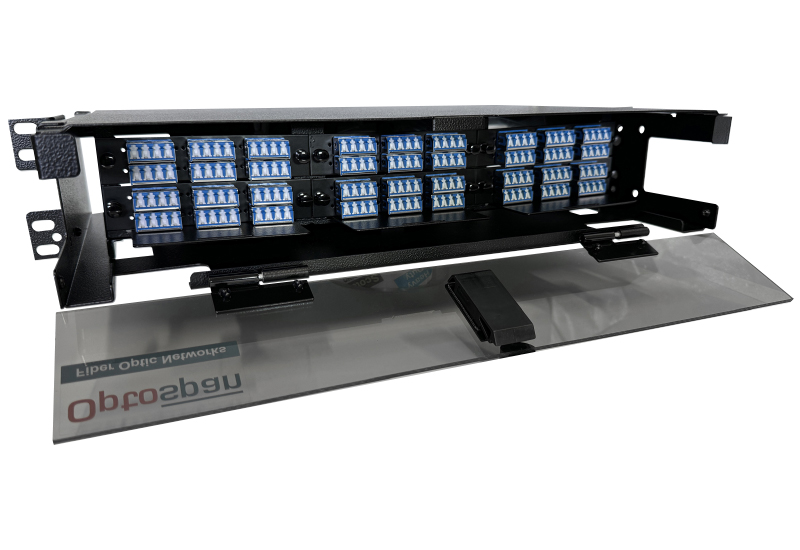
- Choosing the correct Fiber Optic Patch Panel Setup
 June 30, 2026
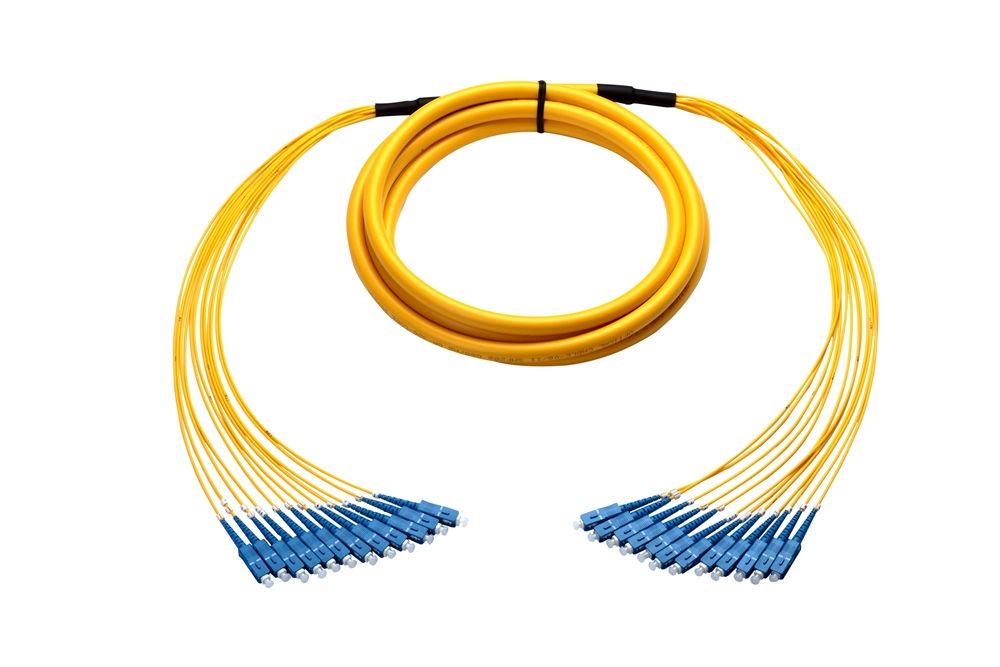
 - Fiber Breakout Cable Benefits
 June 25, 2026
 - Scalable IP Network Solutions
 June 1, 2026
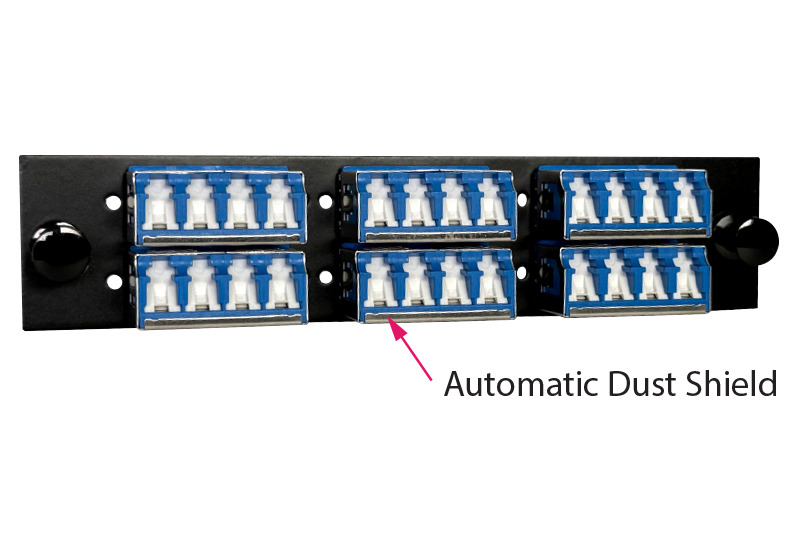
 - Common LC Panel Issues and How to Troubleshoot
 November 26, 2025
 - Choosing the Right Optical Cable Connector for Your Network Needs
 November 15, 2024