MPO Breakout Cable Solutions for Flexible Network Expansion
Today's networks need speed, order, and room to grow without turning each upgrade into a costly rebuild. That is why cable design matters more than many teams first expect. In high-density fiber environments, the right cabling method can simplify moves, reduce waste, and support clean expansion from core links to end equipment.
This is where MPO breakout cable solutions become useful. For businesses planning steady network growth, understanding how these cables work can make day-to-day operations easier and long-term design choices more practical and less stressful.
Why Flexible Expansion Matters in Modern Networks
Network growth rarely happens in a straight line. A company may add new racks, connect more servers, support more users, or prepare for higher data traffic over time. When this happens, the cabling system should not become a barrier.
A flexible network design helps teams:
- Add links without changing the full backbone
- Reduce downtime during upgrades
- Keep cable routing neat and easier to manage
- Use existing fiber capacity in a smarter way
When expansion is planned with care, the network can grow in steps. This is often better than replacing large sections at once.
What an MPO Breakout Cable Does
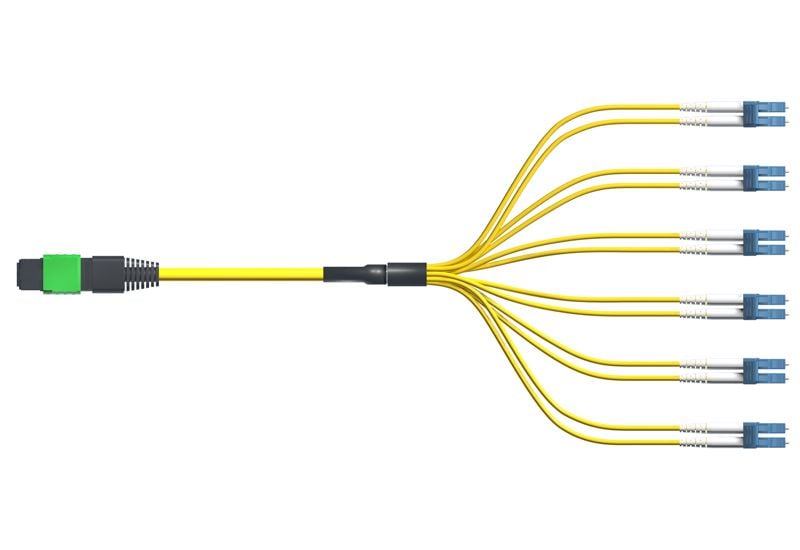
An MPO breakout cable connects a high-fiber-count link to multiple separate fiber connections. In simple terms, it takes one compact connection format and branches it into smaller individual paths that can connect to different devices or ports.
This kind of setup helps in places where one side of the network uses a dense trunk connection, while the other side needs separate links for equipment. It supports a practical transition between backbone cabling and active hardware.
This structure is useful because it allows a dense fiber path to serve many connections without making the layout messy or hard to follow.
How It Supports Network Expansion
As networks grow, many teams need a way to connect new equipment without replacing the whole fiber design. A breakout approach helps by creating a bridge between existing high-density cabling and new ports added later.
Here is how it supports expansion:
- It helps to use the backbone fiber more efficiently.
- It makes it easier to connect multiple lower-count ports.
- It reduces the need for extra cable runs in some layouts.
- It supports staged growth when new equipment is added over time.
This matters in data rooms, enterprise environments, and other structured fiber setups where space and planning both matter.
Main Benefits of Structured Fiber Design
A breakout solution is not only about adding more connections. It also helps improve the order and serviceability of the network.
Better space use
High-density cabling helps save space in racks and panels. That becomes more important as hardware grows and cable paths become crowded.
Easier cable management
Organized cable routing makes maintenance simpler. Teams can trace paths with less confusion, which helps during service work or future changes.
Smoother upgrades
Instead of replacing everything, teams can expand in smaller steps. That can support better planning and lower disruption.
Cleaner transition points
A breakout design helps create a more controlled connection between trunk infrastructure and device-level links.
Where These Solutions Fit Best
Not every network needs the same cable design, but breakout solutions are useful in many common settings.
They often fit well in:
- High-density server rooms
- Structured fiber patching areas
- Equipment zones with multiple separate ports
- Network environments are preparing for phased expansion
- Projects that need both standard options and custom configurations
These use cases show why planning matters. The network does not only need to work today. It should also stay manageable as requirements change, which is why a few practical MPO panel design tips are worth reviewing alongside the cable choice.
Basic Comparison of Cable Approaches
The table below shows a simple view of how a breakout solution differs from a direct single-link approach in a growing network.
| Feature | Direct Single-Link Cabling | Breakout Cable Approach |
|---|---|---|
| Connection style | One link to one path | One dense link is split into several paths |
| Space use | Can take more room as links increase | Supports denser routing in a limited space |
| Expansion method | Often needs more separate runs | Can support staged growth more easily |
| Cable organization | May become crowded faster | Helps create a more structured layout |
| Fit for high-density areas | Less efficient in many cases | Better suited for compact fiber design |
This is not a rule for every installation, but it gives a clear idea of where each method may fit.
What to Consider Before Choosing One
Before selecting an MPO breakout cable, it is smart to review the network layout and the goal of the expansion. A cable should match both current equipment and future plans.
Teams should look at:
- Port types on each end of the connection
- Fiber count requirements
- Routing space in racks and panels
- Expected growth over the next phase of deployment
- Need for standard or custom cable lengths and configurations
A good design choice should make the network easier to manage, not harder after six months.
Why Build Quality Still Matters
Even a well-planned layout can fall short if the physical components are poor. Fiber connectivity depends on precision, consistency, and reliable construction. Small issues in cable quality can lead to bigger service problems later.
Quality matters for several reasons:
- Stable signal performance
- Dependable fit with connected equipment
- Better durability during installation and handling
- Fewer issues during testing and maintenance
This is one reason many network teams pay close attention to the cable assemblies they choose. In fiber design, physical quality is not a small detail.
How SanSpot Supports Practical Fiber Design
SanSpot designs, develops, and markets fiber optic networking products and solutions for a wide range of optical network applications. Its work focuses on higher performance, cost-competitive products built with premium components and flexible configuration options.
For projects involving dense fiber infrastructure, SanSpot supports practical design needs through:
- High-density connectivity solutions
- MTP and MPO fiber cable assemblies
- Flexible options for custom network design
- Technical support from experienced engineers
- Design assistance for 40G and 100G MTP/MPO networks
This kind of support is useful for teams that want a solution matched to the real shape of their network, not a one-size-fits-all answer.
Conclusion
A network should be ready for present workloads, but it should also leave room for the next stage of growth. That is why structured fiber planning needs both technical sense and practical foresight. An MPO breakout cable can help connect those two needs by supporting dense backbone cabling while making separate device connections easier to manage.
When chosen with care, it supports cleaner expansion, simpler maintenance, and better use of space. For teams building with flexibility in mind, SanSpot stands as a focused name in fiber design.